Surge Protection for Homes and Businesses: Essential Strategies
The Silent Threat: What Causes Power Surges?
One stormy night, a sudden flash of lightning. Everything goes dark, and when the lights come back, your TV refuses to turn on. That’s the power of a surge. But it’s not just storms that cause them.
Surges sneak in when you least expect it. Lightning strikes, sure. But also, the power company switches grids, or a heavy-duty appliance—think refrigerator, air conditioner, or even an elevator—kicks on or off. Each one can send a wave of energy rippling through your wiring. Even tiny, repeated surges add up, slowly frying the insides of your electronics.
For both homes and businesses, these jolts are like heart attacks for sensitive devices. Computers, TVs, smart appliances, and industrial controls can all fall victim. Replacing them? Costly. Losing valuable data or business uptime? Even worse.
Plug-In vs. Whole-Building Surge Protection ⚡
When it comes to protecting your property, you’ve got two main shields: plug-in surge protectors or whole-building systems. Let’s break down the differences.
Plug-In Surge Protectors
Imagine these as your line of defense at the door. Power strips with surge protection are everywhere—under desks, behind TVs, or in server rooms. They’re easy to install, affordable, and protect whatever you plug in.
Pros:
- Simple to use—just plug and play.
- Inexpensive upfront.
- Great for small electronics and office gear.
Cons:
- Only protect what’s plugged directly into them.
- Can be overloaded or wear out over time.
- Won’t stop surges coming through other lines (like phone or internet cables).
Whole-Building Surge Protection
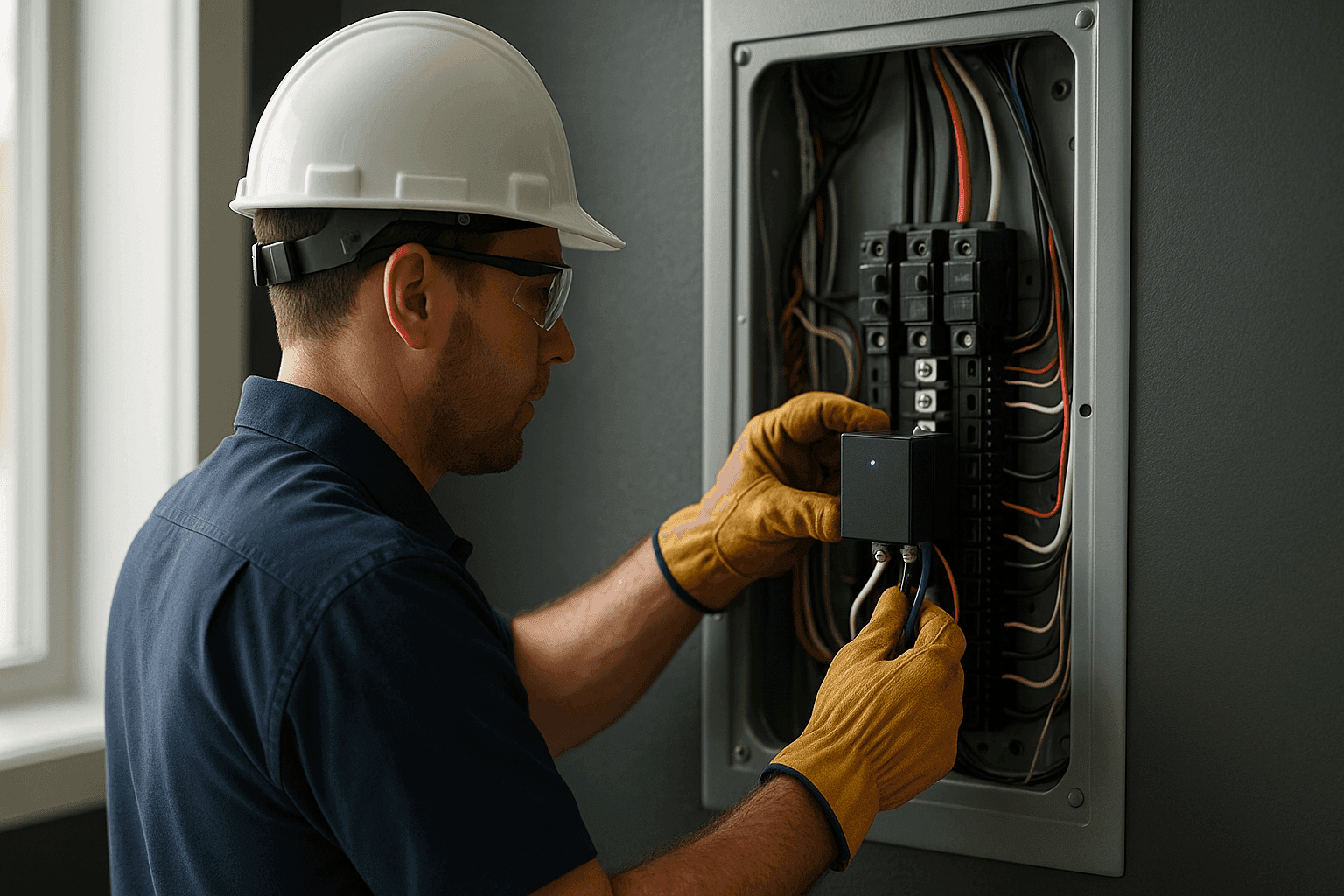
Think of this as a security fence around your whole property. Installed at your main electrical panel by a licensed electrician, these systems shield all your wiring, outlets, appliances, and sometimes even phone and cable lines.
Pros:
- Protects every device connected to your wiring, whether it’s a computer or a fridge.
- Handles big surges from lightning or the grid.
- Often required for sensitive or mission-critical equipment.
Cons:
- Higher upfront investment.
- Needs professional installation (for safety and insurance compliance).
- Doesn’t last forever—surge events can wear it down over time.
Assessing Your Risk: Do You Need Surge Protection?
Not every home or business faces the same threat. Ask yourself:
- Do you live in a storm-prone area?
- Is your neighborhood known for unstable power?
- Do you have expensive electronics, medical devices, or business-critical systems?
- Has your electrician ever flagged wiring issues during a safety inspection?
If you answered yes to any of these, you’re at higher risk. The National Fire Protection Association (NFPA) and the National Electrical Code (NEC) both recommend surge protection for new builds and major renovations, especially where sensitive electronics are present.
Installation Basics: What to Expect
For plug-in protectors, it’s as easy as picking a quality product (look for UL or ETL listing) and plugging it in. But for whole-building protection, the process is more involved.
A licensed electrician will:
- Inspect your main electrical panel for compatibility.
- Select a surge protector sized for your building’s needs.
- Properly ground the system—this is critical for safety.
- Coordinate with any backup generators or transfer switches.
- Test the system after installation.
Attempting to install a whole-building unit yourself is dangerous and can void warranties or insurance claims. Always use a certified electrician for this work.
Typical Costs: What’s the Investment?
Plug-in surge protectors range from $20 to $100+ depending on quality and features. Whole-building surge protection, including installation, often falls between $300 and $1,200, depending on building size, electrical panel type, and any extra features (like phone or data line protection).
Remember, this is a small price compared to replacing a fried computer, HVAC system, or industrial controller.
Best Practices for Ongoing Protection
- Inspect regularly: Surge protectors wear out—replace plug-in models every 2–5 years, or after a major surge.
- Check indicator lights: Many units have status LEDs; replace if the light goes out.
- Coordinate with backup power: Make sure your surge protection and generator/UPS systems work together. Your electrician can help.
- Have regular electrical safety inspections: Especially if you run a business or have a pool, spa, or specialty equipment.
- Label outlets and panels: So anyone (including emergency crews) knows what’s protected.
The Limits of DIY: Why Professional Installation Matters
Surge protection isn’t just about plugging in a strip. Whole-building systems deal with high voltage and complex wiring. DIY installs can leave gaps, create fire hazards, or lead to denied insurance claims after a surge.
Many warranties and insurance policies require certified installation. Don’t risk it—call an electrician for Fault Finding near you, proper installation, and documentation.
Frequently Asked Questions
Do surge protectors last forever?
No. Every time a surge hits, they absorb damage. Most last 2–5 years or until a major event. Always check manufacturer guidelines and replace as needed.
Can I use both plug-in and whole-building surge protection?
Absolutely. Layering both gives you the best defense, especially for sensitive electronics and business-critical devices.
Will surge protection stop every power problem?
No. Surge protectors handle voltage spikes, but not long-term overvoltage, sags, or power outages. For complete protection, pair with UPS systems, proper grounding, and regular electrical maintenance.
Local & Seasonal Considerations 🌩️
If you’re in an area with frequent thunderstorms, hurricanes, or unreliable utility power, surge protection is even more crucial. Seasonal storms are notorious for causing spikes. Businesses with high-tech or manufacturing equipment, or homes with smart appliances, are at particular risk.
Final Thoughts
Surge protection is like an invisible shield for your home or business. It’s easy to forget—until the day you wish you hadn’t. Don’t wait for disaster. Have your electrical safety checked by a certified electrician, and protect your investment from the inside out.
Call P&E Electric now — or reach us anytime at 844-934-4469 .